

.webp)
By 2025, DevOps has become firmly established in software development and IT operations.
DevOps is increasingly becoming a key element for organizations seeking faster delivery, reliable performance, and confident innovation in the future. Here are some interesting developments and key.
DevOps moments that took place in 2025:
1. Integration of artificial intelligence and machine learning
Artificial intelligence and machine learning, which were previously only emerging technologies, became key components of the DevOps workflow in 2025. With the help of AI-based automation, they were able to:
- Improve continuous integration and continuous deployment pipelines by calculating the probability of build failure.
- Improve intelligent code analysis and testing, thereby improving software quality.
- Detect anomalies during monitoring, enabling faster response to incidents.
- Provide intelligent recommendations for resource allocation and cost optimization.
The introduction of AI/machine learning has a side effect: it not only increases efficiency but also reduces human error and the cognitive load on development and operations teams.
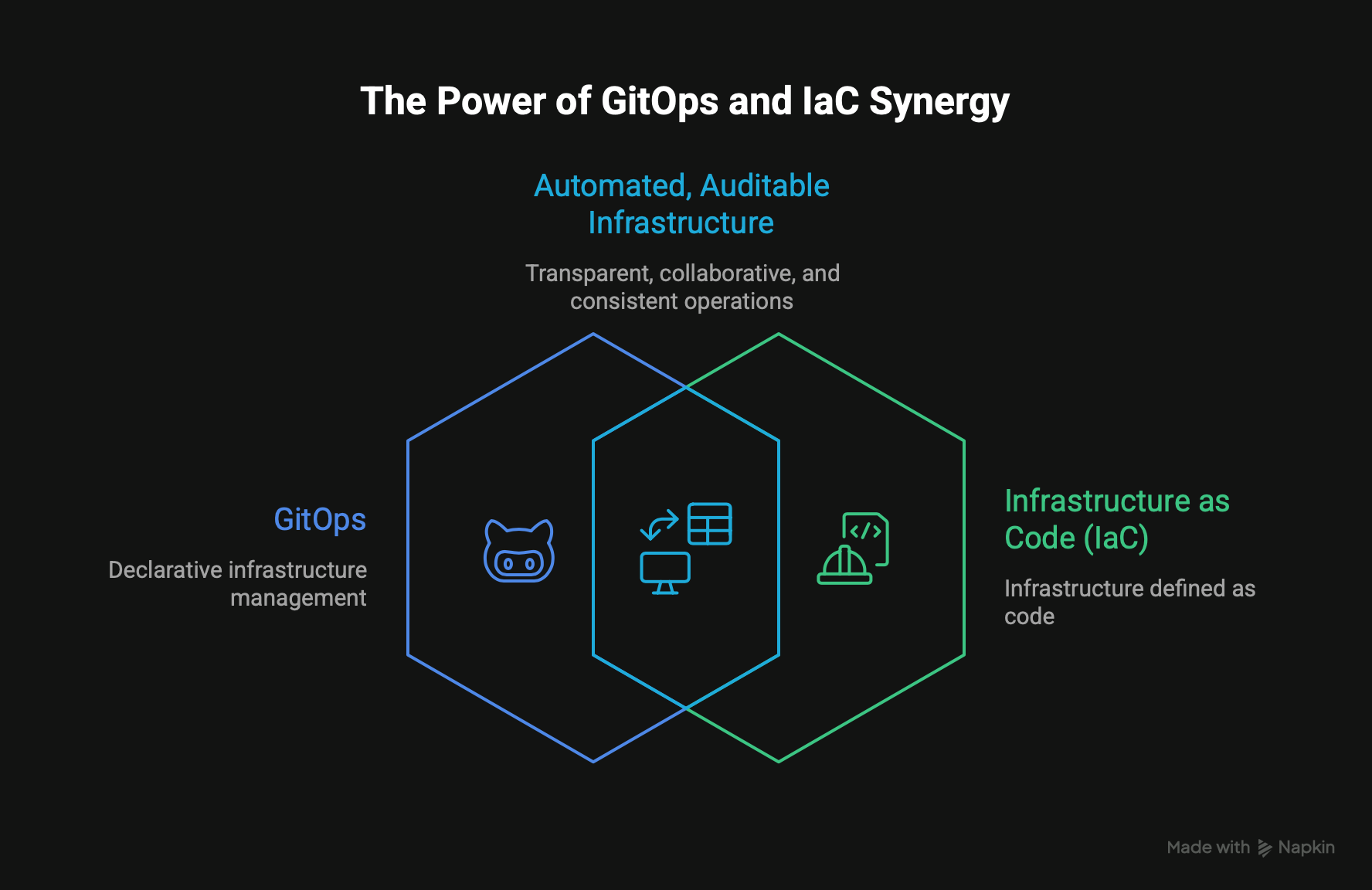
2. GitOps and infrastructure as code (IaC) have grown in popularity
GitOps is the de facto standard for managing application infrastructure and configuration using Git repositories in declarative mode.
Combined with IaC, this has enabled organizations to achieve:
- More transparent and auditable infrastructure changes.
- Better collaboration between developers and operations personnel.
- Faster and safer rollbacks of infrastructure changes.
- Consistency across multi-cloud and hybrid environments.
3. DevSecOps has become a mandatory requirement
Security is no longer a secondary issue; it is an integral part of DevOps processes. DevSecOps practices include security checks, threat modeling, and vulnerability scanning directly in the development process to ensure:
- Continuous regulatory compliance.
- Early detection and remediation of security vulnerabilities.
- Automation of security policy enforcement.
- Reduced risk of breaches and data leaks.
4. Focus on platform engineering and developer experience
With the emergence of platform engineering teams, companies' approach to developer support has changed. They have created an internal platform for developers with self-service tools that have enabled them to:- Bring new developers up to speed faster.
- Simplify access to infrastructure and environments.
- Increase developer productivity and job satisfaction.
- Standardize best practices and toolkits.
- Improve the developer experience, which means higher code quality and faster delivery.
%20(1)%20(2).webp?width=1500&height=1140&name=end-to-end-devops-services%20(1)%20(1)%20(2).webp)
5. Growth of cloud, serverless, and edge computing:
Cloud models using containers and Kubernetes continued to dominate in 2025, although serverless architecture is gaining popularity in applications that require scaling of event-driven workloads. Meanwhile, edge computing has been adopted to minimize latency in Internet of Things applications. DevOps teams have emerged to adapt tools and processes to effectively manage these complex distributed environments.
6. Consolidated toolchains and real-time analytics
As increasingly integrated cloud toolchains emerge to help simplify management, ensure security compliance, and provide real-time operational analytics, the integration of monitoring, CI/CD, and incident management tools has enabled:
- Data-driven decision making.
- Faster troubleshooting and problem resolution.
- Reduced tool sprawl and overhead.
- Improved collaboration between siloed teams.
7. Market growth and adoption
The global DevOps market reached $15 billion in 2025 as the widespread adoption of DevOps practices continues. Indeed, about 80% of enterprises have already integrated DevOps practices. These organizations report tremendous gains in quality, deployment speed, and operational stability. These successes continue to be hampered by issues related to cultural resistance, a shortage of skilled personnel, and difficulties in integrating tool chains.
Conclusion
In 2025, DevOps has matured into a strategic technology that combines automation, security, artificial intelligence, and collaboration to accelerate software innovation. Those who keep pace with these trends will be better positioned in 2026 to gain a competitive advantage in markets that will be increasingly focused on digital technologies and cloud computing. As the DevOps ecosystem evolves, continuous learning and adaptation will be key to sustained success.

 Elizaveta Sokolova


 Juliya Moshkareva