The inclusion of Generative AI within the Software Development Life Cycle itself was advertised as the ultimate "force multiplied." By 2026, the production velocity enabled by this inclusion in the Software Development Life Cycle has, to some extent, become reality.
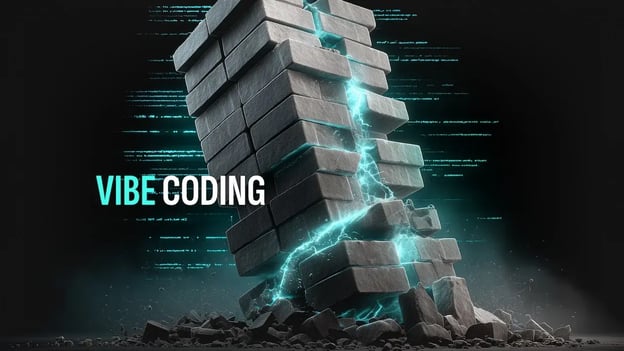
Unfortunately, it has created new systemic risks, with many organizations yet to fully quantify the effects of the increase in velocity across the Software Development Life Cycle. We are now seeing the birth of a new approach called "Vibe Coding."
The trajectory for organizations that place a high value on stability/security is very troubling. We are, in a sense, mortgaging the integrity of complex structures to meet short-term milestones.
The Hidden Anatomy of "Shadow" Technical Debt
Generally, the pre-AI era viewed technical debt as an intended trade-off. Today, as of 2026, the realm of technical debt has evolved to an unseen, seeping, and overwhelming presence: "shadow debt."
"Unfortunately, these AI agents are only optimized to succeed in a probabilistic sense rather than a deterministic sense. They will write code that appears correct on cursory inspection and will pass typical unit tests—but will fail to consider state management, race conditions, or other potential issues predicated on various cloud infrastructure constraints." As a result, a solution is "brittle by design," where a change to a "downstream service can unleash a litany of failures throughout a ‘black box’ of code that no human on the team fully comprehends."
The Three Tensions That Are Destabilizing the Industry
In order to get through this crisis, technical leads must discuss the three fundamental tensions created by the AI-coding bubble:
1. The Seniority Gap and the Erosion of Mentorship
Traditionally, junior engineers learned the craft by doing low-level tasks under the supervision of seniors. As AI handles "grunt work," middle-tier roles in the engineering hierarchy disappear. We are creating a talent vacuum: if the next generation of engineers never learns to debug a complex memory leak because AI "fixed" it for them, they never will develop the intuition required to become the Sages and Architects of 2030.
2. The Nightmare of Maintenance: 60% Debugging Rate
The "Maintenance Tax" is erasing the efficiency gains of AI-assisted coding. Recent data shows high-growth engineering teams are spending more than 60% of each week's sprint debugging and refactoring AI-generated logic. Because the developers did not author the original logic, the time to understand and fix a bug is considerably longer than if they had written it from scratch. We've traded "Writing Time" for an even more expensive "Understanding Time."
3. Architectural Drift
The problem with AI is that it tends to solve problems locally rather than globally. It suggests the best way to write a particular function, without including the long-term architectural vision for the whole platform. In time, this leads to something called Architectural Drift, where the codebase of the system turns into some kind of patchwork comprising various styles and inconsistent patterns-a system where implementing large-scale platform migrations or security updates is virtually impossible.
"Human Filter": The New Gold Standard for 2026
This shift, towards a model in which the value of the human engineer is being rewritten, entails a shift from the era of "Writing Code" to the era of "Code Auditing and Orchestration." By 2026, the primary asset in an engineering team will no longer the person who can implement the feature the fastest. It is the person who can recognize a subtle security bug or an architecture mismatch in 1,000 units of AI-produced output in a matter of seconds. The "Human Filter" is the last safety mechanism before a functional product turns into a security disaster.
Strategic Recommendation: Moving to AI-Orchestration
The transition from mere generation to rigorous orchestration within organizations will help them survive the "AI-coding mess." It involves:
Improved Peer Review: Considering AI-generated PRs with a higher level of scrutiny than for those written by humans.
Security-first DevOps: Use automated scanners to identify common AI-generated hallucinations and insecure patterns.
"Architectural North Star": Ensuring every AI-suggested change sticks to the strictly enforced roadmap for platform engineering provided by humans.
Conclusion: Reliability over Vibe
In the pursuit of technical perfection, order must forever take precedence over chaos. "Vibe Coding" wins the sprint but will lose the war when the system fails under real-world load scenarios. The companies at the forefront in 2026 will be those that have harnessed the power of AI for efficiency while maintaining a focus on quality and security - the last of which is still uniquely human-centered.
 Elizaveta Sokolova