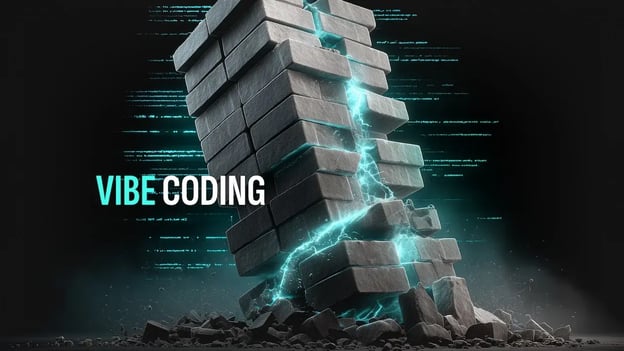
However, the promise of "Vibe Coding" through the use of Generative AI has now reached a breaking point. In 2026, we're facing an increase in production failures and infrastructure bottlenecks. The reason for this failure isn't the use of AI; it's the failure of the human development process as a whole.
If speed is prioritized over technical rigor, it has led to an 80% increase in low-quality requests on DevOps and Platform teams. To achieve technical greatness, we need to fix the structural failures that exist at the intersection of AI and human engineering.
The Anatomy of a Process Failure
The current friction in development cycles is caused by five critical areas of negligence. They are no longer "coding errors"; they are business risks.
1. Inefficient LLM Orchestration
The most common cause of wasted engineering time is the misapplication of Generic AI tools.
- Lack of Requirements: Teams are being prompted without clear Technical Specifications (TS) leading to hallucinations and circular debugging.
- Bulk Prompting: Multiple complex logic issues are being attempted with a single prompt. This leads to fragmented code that does not scale as the LLM cannot keep context with multiple simultaneous prompts.
2. The Collapse of Code Stewardship
"Vibe Coding" has resulted in a lax culture regarding the final product. There is an increase in:
- Structural Decay: Working code without any logical structure.
- Unmanaged Duplication: AI code duplication of logic structures that create maintenance nightmares.
- Missing Artifacts: The final product requests often miss essential build files and/or configuration files and/or service dependencies.
3. The Knowledge Deficit
Artificial Intelligence is not a substitute, but a multiplier. There is a growing knowledge deficit in the basics of programming. Without a firm grasp of the underlying frameworks and basic architectural principles, the engineer is unable to manage the AI process or, more importantly, audit the outcome. If you don’t understand why a given block of code works, you can’t ensure that it will continue to work.
4. Disregard for Enterprise Standards
Speed has caused many to ignore internal standards. Speed is for naught if it ignores:
- DevOps Pipelines: Custom code that won't build in the standard CI/CD environment.
- Cybersecurity Protocols: Hardcoded credentials or insecure patterns suggested by LLMs.
- QA Integration: Code that is "shipped" before it is testable.
The Regulatory and Business Risks
The misuse of LLMs is not merely a technical limitation but also a regulatory and business risk. In order of priority, they are:
- Security Perimeter Violations: Hefty financial sanctions for violating the information security perimeter of client companies.
- Data Leakage & Legal Sanctions: Inability to properly sanitize AI input data could result in exposure of client data and severe legal action.
- Reputational Collapse: Detection of unvetted, unadapted AI code during a client audit equates to incompetence.
- Internal Intellectual Property Risk: Leaking internal company information into the public AI training data.
The Path to Order: AI-Governance
Technical excellence demands a return to structure. We must move away from "Vibe Coding" towards Disciplined Orchestration. This implies strict code reviews, ensuring that all AI output is validated against corporate security standards, and ensuring every engineer is an architect first and then a "prompter" second.

 Elizaveta Sokolova